Marleen Script Font: Elevating Small Business Branding
I still remember the exact moment I realized my homemade candle business looked more like a garage sale than a boutique brand. I was standing at a local craft market, watching potential customers pick up my jars, squint at the labels, and then gently set them back down. The product inside was high-quality soy wax with premium fragrance oils, but the outside told a different story. My typography was an afterthought, a generic free font that felt stiff and impersonal. I knew that to grow from a hobby into a sustainable business, I needed a visual identity that felt as warm and intentional as the products themselves. That search for authenticity led me directly to Marleen Script.
Finding Authenticity in Typography
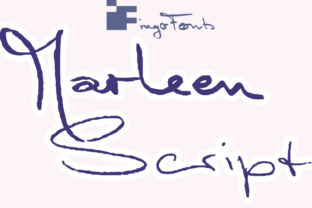
Choosing a typeface for a small business is surprisingly emotional. You aren't just picking letters; you are choosing the voice of your brand. When I first tested Marleen Script on a mockup of my candle labels, the shift was immediate. Unlike many script fonts that feel overly formal or aggressively swirly, Marleen has a light and beautiful feel that reads as genuinely handwritten rather than digitally manufactured. It possesses an authentic charm that bridges the gap between professional polish and personal touch.
For entrepreneurs in the maker space, this distinction matters. Customers buy handmade goods because they want a connection to the creator. A stiff, corporate serif font creates distance, while a messy, illegible scrawl looks amateur. Marleen Script sits perfectly in the middle ground. It offers the elegance required for premium packaging design while retaining the approachable warmth of a note written by a friend. This balance is exactly what transformed my product photography from cluttered to cohesive.
Practical Applications Across Business Touchpoints
Once I integrated this creative font into my brand identity, I found uses for it everywhere. It wasn't just a logo solution; it became a versatile workhorse for daily operations. As a display font, it shines brightest when given room to breathe. I started using it for short, impactful phrases on social media graphics, such as "Hand-Poured Daily" or "Limited Batch." On Instagram, where thumbnails are small and attention spans are short, the distinct letterforms of Marleen remained legible even when scaled down for mobile screens.
Packaging design saw the most significant upgrade. For my candle jars, I used Marleen Script for the scent names—"Lavender & Sage" or "Warm Vanilla"—while keeping the safety warnings and ingredient lists in a clean sans serif. This hierarchy guided the customer’s eye exactly where I wanted it to go. The script conveyed the sensory experience of the scent, while the supporting typography handled the functional information. I also applied this same logic to thank-you cards included in every order. Printing a personalized message in Marleen made each package feel like a gift rather than a transaction, which noticeably increased repeat customer engagement and positive reviews.
- Product Labels: Ideal for highlighting product names or key ingredients without overwhelming small jar sizes.
- Social Media Templates: Creates consistent, recognizable headers for quotes, announcements, and new product drops.
- Print Collateral: Adds elegance to business cards, price lists, and event signage for markets or pop-ups.
- Website Banners: Softens the digital shopping experience with organic, human-centric typography.
Pairing for Professional Consistency
One of the biggest mistakes I made early on was trying to let the script do all the heavy lifting. Marleen Script is a star performer, but it needs a supporting cast. Through trial and error, I learned that font pairing is about contrast. Because Marleen has such a fluid, organic personality, it pairs exceptionally well with structured, modern typography.
For my website and longer-form editorial content, I pair Marleen with a minimalist sans serif font. The geometric simplicity of the body text makes the script headings pop without competing for attention. Conversely, for a more traditional or luxury aesthetic, such as a wedding stationery suite or a high-end skincare line, pairing Marleen with a classic serif font adds a layer of timeless sophistication. The key is to use Marleen for headlines, logos, and decorative accents, reserving simpler typefaces for paragraphs and fine print. This approach ensures readability across all mediums, from tiny sticker labels to large-format banners.
Readability and First Impressions
In the world of small business, first impressions are often visual. Typography affects how trustworthy and professional a brand appears before a customer ever reads a single word about your mission. However, beauty cannot come at the expense of function. While Marleen Script is incredibly legible for a handwritten style, it requires mindful application.
I avoid using it in all-caps, as this destroys the natural flow of the connections and reduces readability. I also steer clear of using it for dense blocks of text. It is a display font designed to be savored, not scanned. When designing for print packaging, I always test the size physically. What looks readable on a 27-inch monitor might disappear on a two-inch lip balm tube. Printing a prototype label and sticking it on the actual product is a non-negotiable step in my process. This practical testing ensures that the aesthetic appeal translates to real-world usability.
Licensing and Technical Considerations
As business owners, we must also navigate the practical side of design assets. Before falling in love with any premium font, checking the licensing is essential. Marleen Script typically comes with various file formats, including OTF and TTF, which ensures compatibility across design software like Canva, Illustrator, and Cricut Design Space. For those of us creating physical products, verifying commercial licensing is critical. You need to ensure your license covers the specific use case, whether that is selling physical goods, creating digital templates, or designing merchandise.
Additionally, exploring the included alternates and ligatures can elevate your design from good to great. Many script fonts include special characters that mimic natural handwriting variations. Using these alternates prevents repetitive letterforms in longer phrases, maintaining that authentic, spontaneous look. Taking the time to understand these technical features allows you to maximize the value of the font and maintain a polished brand identity across every customer touchpoint.
The ROI of Intentional Design
Switching to Marleen Script didn't magically double my revenue overnight, but it did something equally important: it aligned my external presentation with my internal quality. Customers began commenting on how "pretty" and "professional" the branding looked. Retail buyers took meetings because the packaging looked shelf-ready. The consistency across my shop, social media, and packaging built a sense of trust that generic fonts simply couldn't convey.
For any entrepreneur feeling stuck in the DIY phase, updating your typography is one of the most accessible upgrades you can make. It signals to your audience that you care about the details. Marleen Script offers that rare combination of artistic beauty and commercial viability, making it a reliable partner for building a brand that feels both successful and sincerely personal. In a crowded marketplace, that authentic connection is often the deciding factor between a scroll-past and a sale.